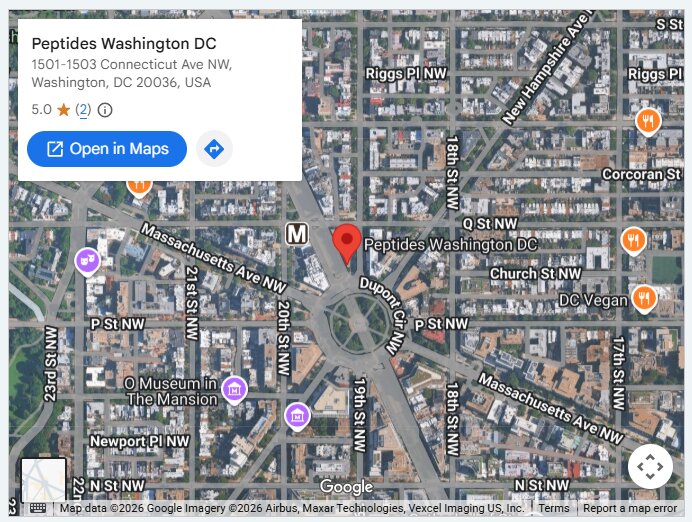
Peptides Washington DC opens a new center in Washington, DC, placing clinical consultation between online peptide research and treatment decisions. A peptide that looks promising on a screen still has to make sense in a patient's medical history. At the new center, qualified healthcare professionals examine hair-loss concerns, weight-management goals, and clinical suitability before determining which treatment options warrant further consideration.
Peptides Washington DC opens at 1501-1503 Connecticut Ave NW, but the treatment someone arrives asking about may not be where the consultation ends. Interest in peptide therapy can begin with a particular compound, while medical assessment may uncover questions about the underlying condition, alternative approaches, or whether intervention is appropriate at all.
A person researching hair growth peptides may arrive focused on stimulating follicles without knowing what is causing the thinning. Because different causes of hair loss may require different treatments, Peptides Washington DC assesses the underlying concern before considering whether the peptide someone initially researched is appropriate.

Identifying the condition is only one part of the decision; the proposed compound must also be assessed against available clinical evidence and its regulatory status. The difference becomes clear with peptides like retatrutide, tirzepatide, and semaglutide, which someone researching weight management may encounter in the same online search. Although approved semaglutide and tirzepatide medications may be prescribed to eligible patients, retatrutide remains investigational and is not approved for routine clinical use. A consultation must distinguish between approved treatment options and investigational compounds, even when online sources present them similarly.
Regulatory approval is one consideration, but even a compound attracting scientific interest must be evaluated for the results it has demonstrated in humans. For someone researching copper peptides for hair restoration, claims about stimulating follicles may sound promising without establishing whether the treatment can produce meaningful hair growth. Peptides Washington DC examines those claims alongside established treatment approaches, helping clients distinguish preliminary research from demonstrated outcomes. The distinction becomes particularly important when setting expectations about how much hair growth a treatment might produce and how long visible changes could take.
“People can spend hours researching a peptide and still be missing the one piece of information that matters most to their decision,” a Peptides Washington DC spokesperson said. “A treatment may have promising research behind it, but that doesn't tell someone whether it belongs in their care. We want people to leave the conversation understanding not just what a treatment might do, but what the evidence actually means for them.”
A Peptide Can Show Biological Promise Without Proving Clinical Benefit
A peptide may affect how cells function in laboratory research but may not produce the same results in humans. The distinction matters in peptide therapy, where online discussions can place early research findings alongside medications already approved for specific medical uses. Showing that a peptide affects certain cells is only the first step; researchers must still establish whether it benefits patients, what dose is appropriate, and what risks it carries.
The difference between laboratory findings and patient results becomes clearer with collagen producing peptide therapy. Someone researching skin restoration may read that certain peptides stimulate collagen-producing cells, but that activity does not establish whether the treatment improves skin firmness or supports tissue repair in humans. Researchers must still determine whether patients experience measurable improvements, how significant those improvements are, and what risks the treatment carries. A peptide that stimulates collagen production in a laboratory has not necessarily been shown to improve a patient's skin.
For someone considering peptide therapy, the distinction changes what is worth asking before pursuing treatment. Has the claimed benefit been demonstrated in human studies? Were the findings relevant to the condition being addressed? What remains unknown about safety and effectiveness? Peptides Washington DC helps prospective clients understand which treatment claims are supported by human studies, what those findings mean for their individual health concerns, and where further research is needed before a peptide can be considered a reliable treatment option.
Key Features and Facts
Consultation options: In-person and online appointments
Service coverage: Washington, DC and surrounding metro communities
Online resources: Appointment booking and peptide therapy educational materials
Consultation focus: Hair-loss concerns, weight-management goals, and questions about emerging peptide research
Frequently Asked Questions
Q: Do clients need to choose a specific peptide before scheduling?
A: No. Clients can begin with a hair-loss concern, weight-management goal, or questions about a particular compound without selecting a treatment in advance.
Q: Does a consultation guarantee access to peptide treatment?
A: No. Consultation does not guarantee treatment. Further steps depend on clinical suitability, available evidence, and professional medical assessment.
Q: Can clients discuss a peptide that is still being investigated?
A: Yes. Clients can seek educational guidance about investigational peptides, including their research status, known limitations, and differences from established treatments. Discussing a compound does not mean it is approved or available for clinical use.
To learn how clinical evidence and individual health circumstances shape peptide therapy decisions, or to schedule a consultation, visit peptideswashingtondc.com.
About Peptides Washington DC
Peptides Washington DC is a Washington, DC wellness center offering consultations and educational guidance on peptide-related health concerns. Its work connects people exploring hair restoration, weight management, and emerging peptide research with healthcare professionals who can help assess their questions and possible next steps.
###
Contact
Peptides Washington DC
1501-1503 Connecticut Ave NW
Washington, DC 20036, USA
(202) 759-3217
https://peptideswashingtondc.com/
[email protected]
Disclaimer: This press release is provided for general informational and educational purposes only and does not constitute medical advice, diagnosis, or treatment. Treatment eligibility, risks, benefits, and expected outcomes vary by individual and should be determined by a qualified healthcare professional. References to investigational compounds are for educational purposes only and do not imply that those compounds are approved, available, or appropriate for clinical use. Patients should consult a qualified healthcare professional regarding their individual circumstances.
Source: 38 Digital Market News
Release ID: 2660916



