As school cellphone restrictions expand nationwide, The Dysregulated Kid author Dr. Roseann Capanna-Hodge says removing the device is only step one—children also need the nervous system skills to handle what comes next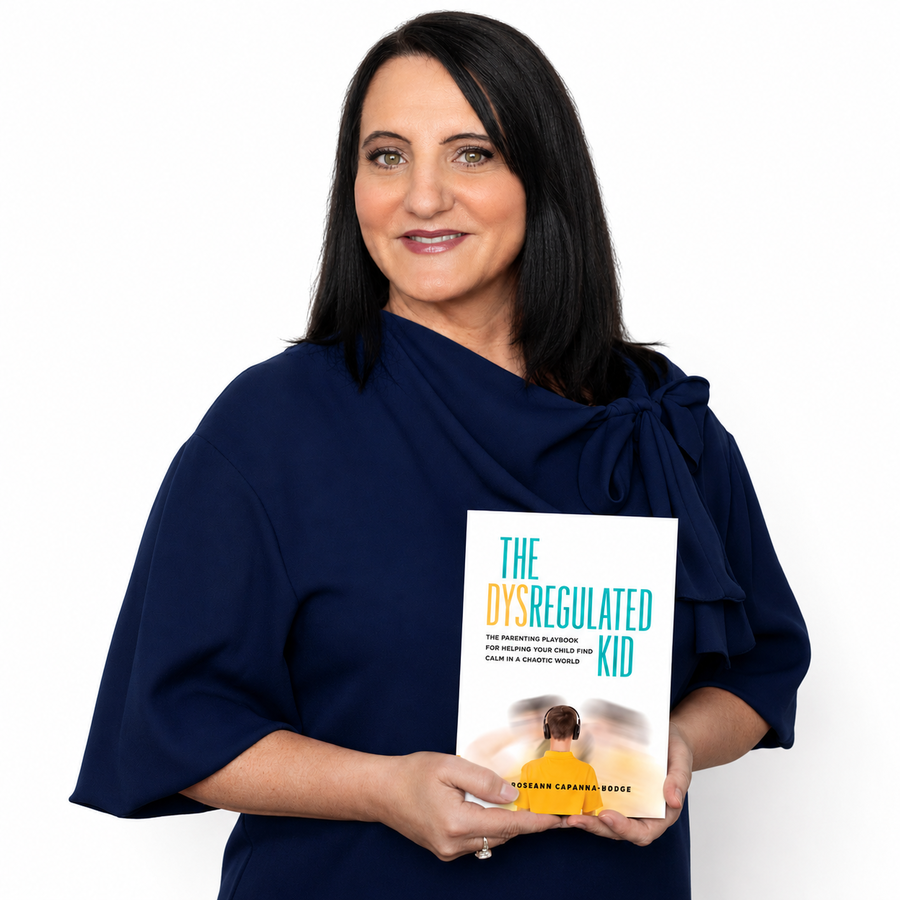
RIDGEFIELD, CT, September 09, 2026 /24-7PressRelease/ -- Across America, children are being asked to put their phones away.
At least 39 states and the District of Columbia now require school districts to ban or restrict student cellphone use, according to Education Week's national tracker, as policymakers, educators, and families grapple with the effects of constant connectivity on learning, attention, and student well-being.
The policy momentum comes as new research adds urgency to the national conversation about young people and technology. A randomized clinical trial published September 4 in JAMA Health Forum found that health warnings about social media were perceived by teenagers and young adults as more effective at discouraging use than a generic screen-time-break warning. The researchers noted that 90% to 95% of U.S. teenagers and young adults use social media, while the share of teens reporting almost-constant social media use has risen from 24% to 46% over the past decade.
But children's mental health expert Dr. Roseann Capanna-Hodge says the rapidly expanding phone-free movement raises a question that policies alone cannot answer:
What happens when the device is gone—but the overwhelm is still there?
The game ends.
The tablet shuts off.
The phone goes into the backpack.
And a child who seemed fine seconds earlier may suddenly be bargaining, yelling, crying, shutting down, or exploding.
A parent—already carrying work, dinner, homework, schedules, siblings, finances, and too little sleep—is left wondering whether to lecture, negotiate, punish, give in, or somehow stay calm while their own heart starts racing.
That is the moment at the center of Dr. Roseann's new book, The Dysregulated Kid: The Parenting Playbook for Helping Your Child Find Calm in a Chaotic World, publishing September 22, 2026, from Page Two Books.
"Taking away the phone removes the device," says Dr. Roseann. "It doesn't teach a child how to regulate what comes up next. Phone-free is a boundary. Regulation is a skill. Kids need both."
The Screen-Time Battle May Not Really Be About the Screen
Much of the national phone-ban debate has focused on access:
Should students have phones during class?
Where should devices be stored?
How should schools enforce the rules?
Dr. Roseann's work begins one step later.
For some children, a phone may become more than entertainment. It can become a fast, predictable way to shift away from boredom, frustration, loneliness, anxiety, or emotional discomfort.
Bored? Scroll.
Anxious? Watch.
Frustrated? Game.
Lonely? Connect.
Overwhelmed? Escape.
When that outlet disappears, the underlying discomfort doesn't necessarily disappear with it.
Sometimes, it may become more visible.
"Phones didn't create every dysregulation problem," says Dr. Roseann. "But for some children, a phone may become a quick escape from uncomfortable feelings. Taking the screen away may not create the dysregulation—it may reveal what was already underneath."
That doesn't mean phone restrictions are a mistake. And it doesn't mean screens cause every behavioral or mental health challenge.
It means setting a boundary and helping a child build the skills to tolerate that boundary are two different jobs.
Drawing on more than 30 years of clinical experience and insights from more than 10,000 quantitative EEG (QEEG) brain maps, Dr. Roseann has spent her career helping families understand what may be happening beneath behaviors commonly labeled defiant, anxious, impulsive, oppositional, or unmotivated.
Her central message:
Behavior is the signal. The nervous system tells us where to start.
Why a Small Trigger Can Cause a Huge Reaction
One of the central concepts in The Dysregulated Kid is the "Stress Cup."
Throughout a child's day, stress can accumulate:
Poor sleep.
Academic pressure.
Friendship problems.
Sensory overload.
Hunger.
Transitions.
Family stress.
Packed schedules.
Screens.
By the time a parent says, "Turn it off," the child's Stress Cup may already be close to overflowing.
The device coming away may be the final drop.
"The size of the reaction often doesn't match the size of the moment because parents may be seeing the overflow—not everything that filled the cup before it," says Dr. Roseann.
That reframe doesn't excuse aggression, disrespect, or harmful behavior.
It changes what adults do first.
Instead of immediately asking, "How do I stop this behavior?" Dr. Roseann teaches parents to ask, "What might this nervous system be telling me—and what does this child need before they can handle the boundary I'm setting?"
When an Overwhelmed Child Meets an Overwhelmed Parent
There is another nervous system in the room:
The parents.
In the American Psychological Association's 2023 national survey, 48% of parents said their stress was completely overwhelming on most days. The U.S. Surgeon General has separately identified parent and caregiver well-being as a public-health priority.
Now add the screen-time battle.
The child gets louder.
The parent gets louder.
The child becomes more reactive.
The parent's patience disappears.
What started as a technology boundary can become a collision between two stressed nervous systems.
This is called co-dysregulation.
"Parents don't need another person telling them to stay calm," says Dr. Roseann. "They need to know what to do when their child is losing it and they're five seconds away from losing it too."
That is one reason The Dysregulated Kid begins with the adult—not because parents cause their child's dysregulation, but because a more regulated adult is better positioned to support an overwhelmed child through a difficult moment.
The Dysregulated Kid Is the Playbook for What Happens Next
Parents already know they should set limits, stay calm, be consistent, and avoid yelling.
The harder question is how when the meltdown is already happening.
The Dysregulated Kid was written for that moment.
At the heart of the book is Dr. Roseann's Regulation First Parenting® approach:
Regulate → Connect → Correct™
First, the adult regulates their own nervous system.
Then they help the child move toward greater calm and connection.
Correction, accountability, boundaries, teaching, and problem-solving come when the child is better able to engage with them.
"This isn't permissive parenting," says Dr. Roseann. "You can set the right boundary and still have a dysregulated child. The answer isn't to abandon the boundary. It's to help a child build skills for handling the boundary that naturally causes frustration."
The book turns that science into practical, repeatable actions through tools including The Love Pause®, RESET to Regulate®, CALMS Dysregulation Protocol®, 10-Minute Resets, the Stress Cup, and strategies for Device Dysregulation™.
Parents learn how to recognize overload earlier, regulate themselves before reacting, reduce co-dysregulation, support children through transitions away from highly stimulating activities, and hold boundaries without making every limit a power struggle.
"The hardest moment isn't deciding your child needs less screen time," says Dr. Roseann. "It's enforcing the limit and suddenly having an overwhelmed child in front of you. That's the moment parents need a playbook."
The Bigger Question for America's Phone-Free Generation
America is increasingly answering one question:
Should children have constant access to phones?
Dr. Roseann believes the next question may matter even more:
What skills are we helping children practice when the phone isn't there?
Can they tolerate boredom?
Recover after frustration?
Handle a transition?
Sit with discomfort?
Ask for help?
Connect face-to-face?
Return to an activity after a hard moment?
Phone restrictions can create space for children to practice these skills.
But the restrictions don't automatically teach the skills themselves.
"The goal isn't simply a child who can function without a phone," says Dr. Roseann. "It's a child who can regulate without one."
Available for Television, Podcast, Media Interviews, and Speaking Engagements
Dr. Roseann Capanna-Hodge is available for television, podcast, and media interviews, as well as keynotes, conferences, panels, professional events, and organizational trainings on timely topics including:
• Phone Bans Are Here. Are Kids Ready for What Happens When the Screen Goes Dark?
• Why Are Kids So Dysregulated? The Quiet Crisis Derailing Families
• Warnings, Limits, and Phone Bans Are Growing—But Are We Teaching Kids What to Do Without the Screen?
Dr. Roseann is also available for practical on-air demonstrations of the Stress Cup™, The Love Pause®, and simple Regulation First Parenting® tools parents can use during screen transitions, meltdowns, and other high-stress moments.
For speaking engagements, she brings her nervous-system-first approach to schools, organizations, conferences, workplaces, and professional audiences, translating complex brain science into practical tools people can use immediately.
About The Dysregulated Kid Book
The Dysregulated Kid: The Parenting Playbook for Helping Your Child Find Calm in a Chaotic World is a practical, science-backed guide for parents who are exhausted from trying to manage behavior without understanding what may be driving it.
Built around Regulation First Parenting®, the book translates complex brain science into simple tools parents can use to regulate themselves, support their child during difficult moments, reduce escalating power struggles, and build emotional regulation and resilience over time.
Published by Page Two Books, The Dysregulated Kid.
Pre-orders and exclusive bonuses, including tools families can begin using immediately, are available at: www.dysregulatedkid.com
About Dr. Roseann Capanna-Hodge
Dr. Roseann Capanna-Hodge, Ed.D., LPC, BCN, is a nationally recognized children's mental health expert, licensed therapist, certified school psychologist, and Board Certified in Neurofeedback with more than 30 years of clinical experience.
Drawing on insights from more than 10,000 quantitative EEG (QEEG) brain maps, Dr. Roseann has helped thousands of families better understand the connection between nervous system regulation, behavior, learning, and emotional health.
She is the founder of Regulation First Parenting®, creator of the CALMS Dysregulation Protocol®, podcast host of top 1% podcast, Dysregulated Kids, with more than 2 million downloads, and author of The Dysregulated Kid: The Parenting Playbook for Helping Your Child Find Calm in a Chaotic World.
Dr. Roseann has been featured in The New York Times, Forbes, Parents, NBC, CBS, Fox, and The Mel Robbins Show, and hosts the top-ranked Dysregulated Kids podcast with more than 2 million downloads worldwide.
Media Contact
Dr. Roseann Capanna-Hodge
Media Inquiries: [email protected]
Phone: 203-438-4848
Website: drroseann.com
Read the original story here: https://www.24-7pressrelease.com/press-release/538386/america-is-taking-phones-away-from-kids-a-child-mental-health-expert-says-the-real-test-comes-after-turn-it-off
Press Release Service and Press Release Distribution by 24-7 Press Release Newswire
America Is Taking Phones Away From Kids. A Child Mental Health Expert Says the Real Test Comes After "Turn It Off."
Sep 9, 2026
Looking for Local Media Coverage in the United States of America?
We have a place for all at the

What's Hot

SportsSep 4, 2026
Frank Solich, who coached at both schools, refuses to choose sides for Ohio-Nebraska season opener


More News

SportsAug 10, 2026
Frankie Harris shoots 59 and wins in a playoff on the Korn Ferry Tour
Press Releases
Selection Guide for High Quality Multinorm Workwear: Huahao'...
Top-Notch Plumbing, Heating - Air Marks 10 Years of Service ...
Parents No Longer Have to Wait 3 Weeks for a Sleep Consultan...
Reliable Hospital Grade Countertops Manufacturer Koris Sets ...
Ascend Business Suites Brings Private Office Options to Nobl...

Is Your Customer.
Publish news of your business, community or major event to get local media coverage and reach local audiences who really care.